
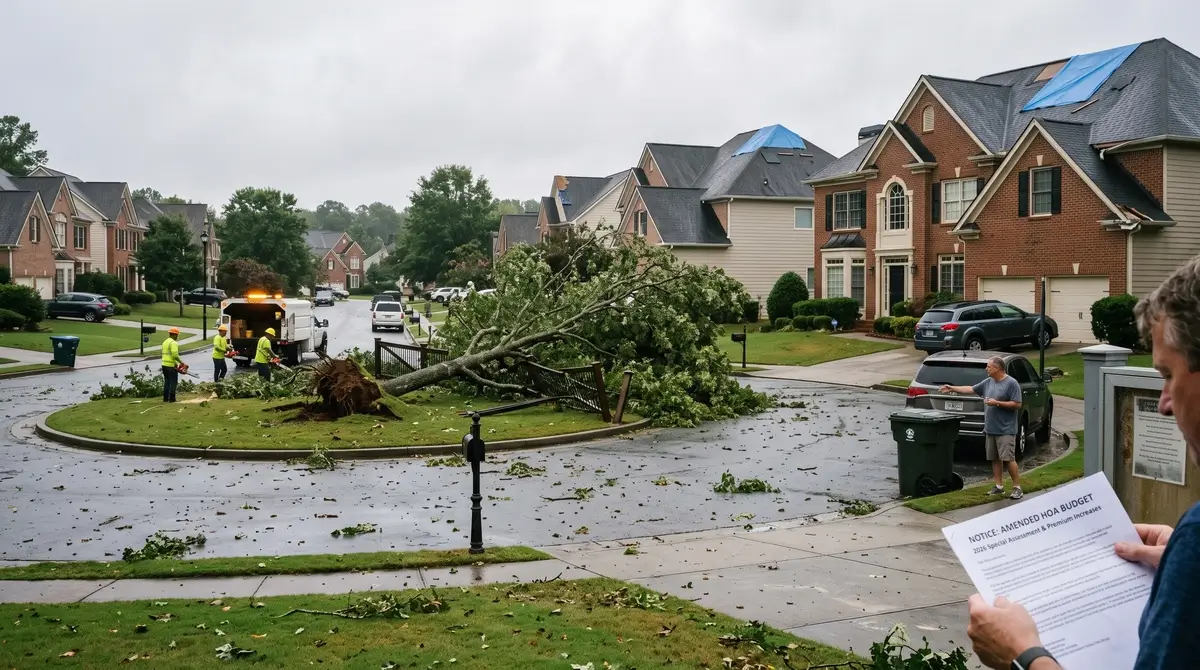
A Suwanee board member who approved a reserve transfer before lunch and drafted a fence complaint response before dinner already has a full plate without a special assessment notice landing in the mix. That kind of nonstop decision load on volunteer boards is part of why so many Gwinnett County communities get blindsided when a major repair bill finally surfaces. Severe weather events, rising insurance premiums, and aging infrastructure are converging in ways that flat dues were never built to absorb.
This guide breaks down what’s driving the increase locally and what boards can do before the next notice goes out.
Key Takeaways
- Reserve studies written years ago rarely reflect current Georgia construction and insurance pricing.
- Severe storm activity across the metro Atlanta region accelerates wear on roofs and drainage systems.
- A repair deferred for even one season tends to return as a far larger bill.
- Consistent, itemized reporting helps owners accept an assessment instead of resisting it.
- Past enforcement decisions shape how residents respond when a new financial request arrives.
Why Reserve Studies Fall Behind Local Conditions
Most reserve schedules were written before Georgia’s construction costs and storm-related insurance claims climbed to current levels. Few boards revisited those projections once pricing shifted, and the gap keeps widening.
| Reserve Planning Factor | Original Assumption | Current Suwanee Reality |
|---|---|---|
| Roof and drainage repairs | Priced using older material rates | Higher due to regional storm damage claims |
| Contractor availability | Multiple bids within days | Longer waits tied to high regional demand |
| Insurance renewal | Flat, predictable annual cost | Rising steadily with statewide claims activity |
| Monthly dues | Set once, rarely revisited | Falling further behind actual repair costs |
Owners and investors often ask why dues keep climbing even without an obvious project underway, and the honest answer usually traces back to this widening gap. Associations that have worked through the dynamics covered in preventive maintenance staying on track tend to recognize this pattern early, since stalled projects often mask a deeper funding shortfall.
How Regional Storm Activity Pushes Insurance Costs Higher
Georgia associations face a particular kind of insurance pressure tied to severe weather patterns across the Atlanta metro. A few trends show up consistently:
- Master policies covering common areas renew at rates well above the previous term.
- Insurers increasingly price in regional storm and hail claims when setting renewal rates.
- A lapse in coverage creates real liability rather than meaningful savings, since governing documents require it.
- Associations without a reserve cushion pass these increases directly to owners.
The median special assessment reached $1,100 per door in 2025, and in storm-prone regions across the Southeast, that figure often runs higher once local repair and insurance costs factor into the equation.
A Real Example: What Happens When a Damaged Roof Gets Delayed
One mid-sized townhome community near Suwanee shows how deferred repairs can spiral once a known issue gets pushed back.
Two Seasons of Warning Signs
The association’s reserve study flagged roof damage from a prior storm season two budget cycles in a row. The board held off addressing it fully both times, worried that owners already dealing with rising property taxes wouldn’t welcome another increase. The board treasurer at the time later admitted she didn’t feel confident bringing it up again so soon.
The Bill That Followed
A severe spring storm system worsened the existing roof damage, causing water intrusion in several units and damaging shared hallway ceilings. The emergency repair came in well above what a planned replacement would have cost a year earlier, and the board had no option left except a special assessment due within 45 days, leaving little room to negotiate contractor pricing under that kind of urgency.
Thin Reporting Makes Every Assessment Harder to Defend
Boards earn owner trust through steady, itemized reporting rather than a single explanation delivered after a problem has already escalated. A few warning signs tend to surface before a funding gap becomes a surprise bill:
- Monthly financial statements arrive late or get skipped for a cycle or two.
- Reserve balances get mentioned verbally at meetings but never appear in writing.
- Vendor invoices show up that weren’t part of any earlier budget discussion.
- Board members field the same financial questions repeatedly because the numbers were never explained clearly the first time.
Communities working through the situation described in different priorities inside boardrooms often discover that accurate numbers alone rarely resolve disagreement; timing and clarity matter just as much.
Florida offers a telling comparison point for how fast insurance costs can climb, where homeowners now pay an average of $2,691 a year for property coverage, a figure that’s risen nearly 50 percent since 2020. Georgia associations face a different kind of weather exposure, but the pressure on reserves lands in a similar place.
Enforcement History Shapes How Owners Respond
Special assessments land hardest in communities where owners already feel excluded from board decisions. Associations leaning on rigid, inflexible enforcement tend to see that frustration resurface the moment a financial request arrives.
- Owners question the math even when the calculations are sound.
- Meeting attendance spikes and conversations grow tense quickly.
- Unrelated rule disputes from months earlier resurface during the vote.
- Some residents delay payment simply to register frustration with the board’s general approach.
A homeowner who already feels unheard rarely extends patience to a large bill, and he typically says so at the next meeting. Communities working through the dynamics in resident rule enforcement reaching a breaking point often find that same frustration resurfaces during assessment season.
Practical Steps for Suwanee Boards
How a board prepares before a vote usually matters more than the final dollar figure. A short list of moves can reduce both the size of an assessment and the resistance that follows:
- Pull the current reserve study and compare it against actual account balances rather than relying on memory.
- Request updated contractor bids instead of leaning on pricing from a few years back.
- Review delinquency rates closely, since unpaid dues often widen the shortfall further than expected.
- Share the full reasoning with owners well before the vote, not after the notice is mailed.
- Put routine compliance walkthroughs on the calendar, so roof wear, drainage issues, and small violations get caught while they’re still inexpensive to address.
Boards navigating that kind of pressure often lean on resources built for board members to understand their options before a vote locks them in.
FAQs about HOA Special Assessments in Suwanee, GA
Is there a cap on how much an HOA can charge through a single special assessment?
Some governing documents set a percentage limit tied to the annual budget for board-approved charges, while amounts above that threshold usually require a formal vote from homeowners before moving forward.
How soon after a storm does a board typically know if an assessment will be necessary?
Timing varies, but most boards wait for contractor assessments and insurance claim outcomes first, which can take several weeks before the full scope and cost of the damage becomes clear.
Can new owners be held responsible for an assessment approved before they purchased their home?
Generally no, if the assessment was approved and billed before closing, though buyers should review recent board minutes carefully since future assessments tied to known issues remain a possibility.
Does insurance ever cover part of a special assessment tied to storm damage?
Sometimes. If the master policy covers the triggering event, insurance proceeds may offset a portion of the cost, though deductibles and coverage gaps often leave a balance for owners.
What role does a reserve study play in determining whether an assessment is fair?
A current reserve study gives homeowners a benchmark to compare against, showing whether the association had reasonably planned for the expense or is reacting to a funding gap instead.
Strengthening Financial Resilience Across Suwanee
Severe weather and rising insurance costs aren’t easing up across the metro Atlanta region, and Suwanee associations are likely to keep feeling that pressure on their reserve funds for years to come. Boards that manage it well tend to share a few habits: current reserve numbers, consistent communication, and reporting that holds up to scrutiny before a vote ever happens.
PMI Reliance partners with Suwanee associations to build that kind of financial structure, helping boards explain decisions with real numbers instead of guesswork. Explore your reserve outlook with our team and get an honest picture of where your community stands before the next major storm forces the issue.
